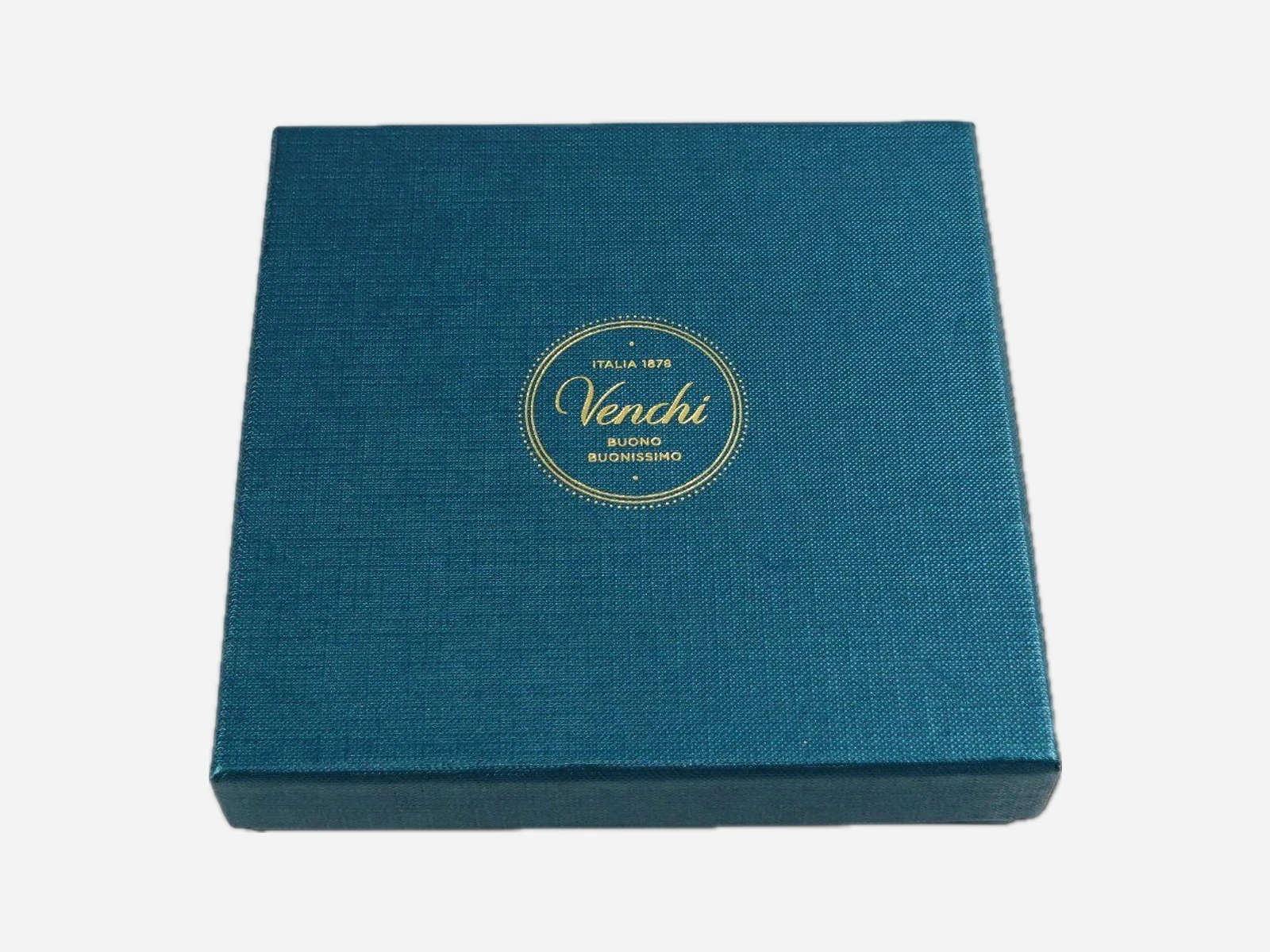
Foil stamping
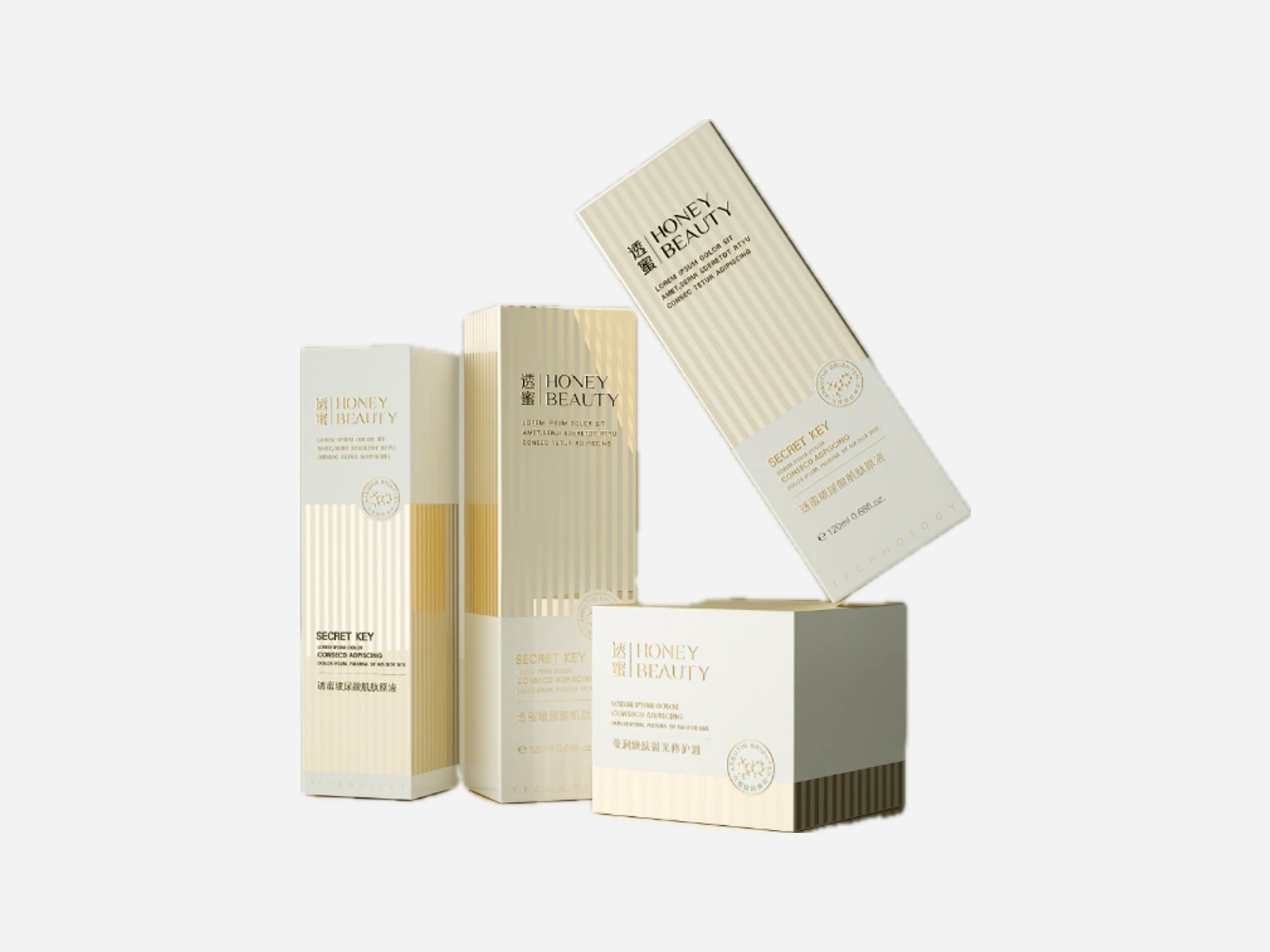
Foil is transferred with heat and pressure to create metallic or pigmented detail. It works well for logos and controlled focal areas but needs clearance from tight folds and very fine reversed details.
Confirm foil color, coverage, registration tolerance and whether the surface below is laminated or uncoated.
- Best for logos and accent details
- Requires a stamping die and setup
- Fine detail depends on paper and artwork
- Check scuff and fold position
Spot UV and embossing
Spot UV creates gloss contrast on selected areas and is often paired with matte lamination. Embossing raises the paper surface while debossing presses it inward.
Both processes require accurate registration. Heavy coverage or placement across creases can reduce consistency.
- Use vector masks for finish areas
- Keep key detail away from fold lines
- Review depth on the actual board
- Approve registration on a physical sample
Lamination and practical handling
Matte or gloss film changes color density, surface feel and scuff resistance. Soft-touch films create a distinctive texture but require careful scratch and fingerprint review.
For food, recycling or regulated applications, confirm whether the selected film and adhesive match the buyer requirement.
- Matte for low-glare presentation
- Gloss for higher reflectivity and color density
- Anti-scuff options for demanding handling
- Document the exact film for repeat orders